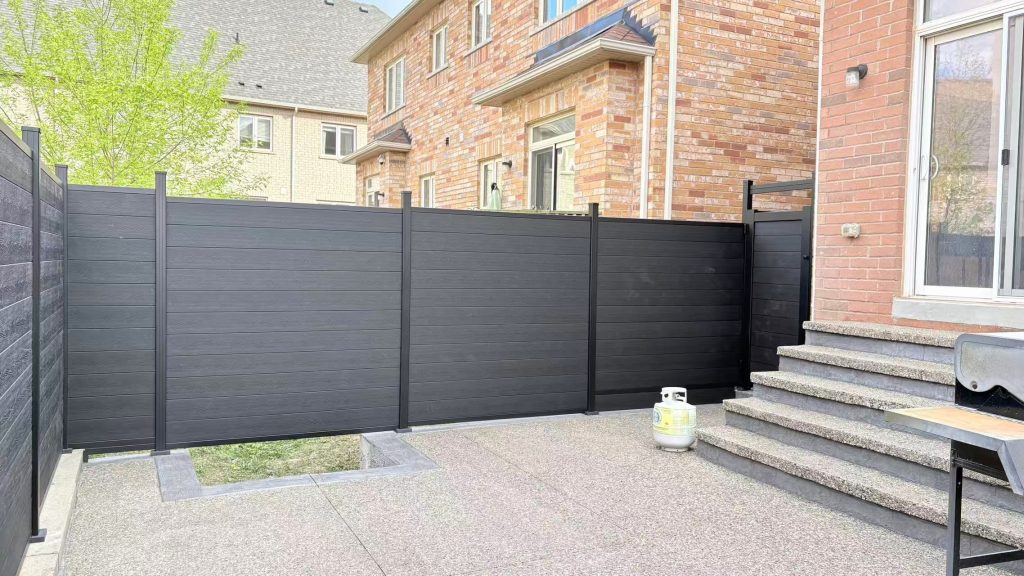
Fencing is an essential investment for residential, commercial, and rural properties across the United States and Canada. It serves core functions including privacy enhancement, property boundary definition, pet containment, and outdoor aesthetic upgrading. For decades, traditional solid wood fences have dominated the North American fencing market due to their natural texture and affordable upfront cost. However, with the growing demand for low-maintenance, weather-resistant, and sustainable outdoor building materials, WPC (Wood-Plastic Composite) fences have emerged as a high-performance alternative and rapidly gained popularity in US and Canadian households and construction projects. This article provides an in-depth comparison between WPC fences and traditional wood fences, focusing on the unique climatic conditions, consumer needs, and market characteristics of North America, to help property owners, contractors, and investors make cost-effective and long-term oriented choices.
Material Composition & Core Performance Differences
Traditional wood fences for the North American market are mainly made of local softwoods such as pressure-treated pine, cedar, and spruce. These natural timber materials feature authentic wood grain, warm tactile sensation, and excellent compatibility with North American suburban architectural styles. Structurally, solid wood is breathable and flexible under normal temperatures, delivering a premium natural aesthetic that is irreplicable by early synthetic materials. Nevertheless, natural wood has inherent structural defects: it is vulnerable to moisture penetration, insect infestation, and ultraviolet radiation erosion, which are easily aggravated by the extreme and diverse climates of the US and Canada.
WPC fences are eco-friendly composite materials manufactured by mixing recycled wood fibers, HDPE plastic, and special functional additives, followed by high-temperature extrusion and co-extrusion molding. Tailored for harsh North American weather, modern co-extrusion WPC fences feature a dense outer protective layer that effectively isolates water, air, and UV rays. Unlike pure wood, WPC materials completely avoid natural wood’s inherent flaws such as cracking, warping, rotting, and mildew growth. With stable physical properties, they adapt perfectly to the complex and variable climatic environments across the United States and Canada.
Climate Adaptability: Suited for US & Canadian Weather Extremes
North America boasts a vast territory with highly differentiated regional climates, which is the key factor determining the service life and stability of fencing materials. Traditional wood fences face severe challenges in all major climate zones of the US and Canada. In the northern regions of Canada and the northern US states including Alaska, Minnesota, and Montana, extreme cold, heavy snow, and frequent freeze-thaw cycles cause wood fibers to expand and contract repeatedly, leading to board cracking, warping, and loose fence posts within 3–5 years. In the southern US such as Arizona, Nevada, and Texas, long-term high temperatures above 43°C and intense strong ultraviolet rays accelerate wood dehydration and aging, making the fence fade, gray, and brittle rapidly. In humid coastal areas like Florida and British Columbia, high humidity and rainy weather easily trigger wood rot, mildew, and termite damage, greatly shortening the service life of wooden fences.
WPC fences show outstanding climate adaptability across all North American regions. The co-extrusion protective layer of high-quality WPC products effectively resists UV radiation, preventing fading and aging under long-term strong sunlight. Its compact composite structure is completely waterproof and moisture-proof, with no rotting or mildew in humid coastal environments. In cold northern regions, WPC maintains stable toughness and hardness without brittle cracking caused by low temperatures or freeze-thaw cycles. It also features excellent insect-proof performance, effectively avoiding termite and pest erosion that plagues traditional wood fences. Whether facing extreme heat, severe cold, heavy rain, or strong sunlight, WPC fences can maintain structural integrity and stable appearance for a long time.
Maintenance Requirements & Time Cost
High maintenance costs are the biggest pain point of traditional wood fences for North American homeowners. To prolong the service life and retain aesthetic appeal, wooden fences require regular and systematic maintenance. Normally, they need professional cleaning, sanding, sealing, and staining every 1–2 years. Damaged or warped boards need regular inspection and replacement, and anti-termite and anti-mold treatments must be carried out periodically. For large-yard properties common in the US and Canada, the annual maintenance time and labor costs are considerable. Once maintenance is neglected, the fence will quickly fade, deform, and rot, seriously affecting curb appeal and property value.
WPC fences are typical low-maintenance outdoor materials, perfectly fitting the fast-paced lifestyle of North American residents. Thanks to its waterproof, anti-fouling, and UV-resistant surface, WPC fences do not need regular painting, staining, or sealing. Daily maintenance only requires simple water flushing or wiping to remove dust and stains. There is no need for professional maintenance operations or regular material replacement throughout the service life. This zero-maintenance advantage greatly saves homeowners’ time, labor costs, and long-term material renewal expenses, becoming one of the core reasons for its growing market share in the US and Canada.
Lifespan & Long-Term Cost Performance
In terms of upfront costs, traditional wood fences have obvious advantages. The unit price of ordinary pressure-treated pine fences is low, with simple and fast installation, making them the preferred choice for homeowners with tight short-term budgets. However, its short service life leads to poor long-term cost performance. The average service life of untreated ordinary wood fences is only 5–8 years, and even regularly maintained high-quality cedar fences can only last 10–15 years. Combined with repeated maintenance fees, board replacement costs, and labor expenses, the total investment of wood fences will far exceed the upfront budget within a decade.
WPC fences have a relatively higher initial purchase and installation cost, but they deliver superior long-term economic benefits. High-quality North American-standard WPC fences have a service life of 20–30 years, 2–3 times that of traditional wood fences. With almost no subsequent maintenance and replacement costs, the total life-cycle cost of WPC fences is significantly lower than that of wood fences. Market data from North American building materials industries shows that for every 100 feet of fence, WPC solutions can save property owners more than $1,700 in comprehensive costs within 10 years. For residential communities, commercial parks, and rural large plots that require long-term use, WPC fences have overwhelming cost performance advantages.
Aesthetics & Property Resale Value
Traditional wood fences feature unique natural wood texture and warm color tone, with strong natural affinity, which can well match the pastoral and suburban architectural styles prevailing in the US and Canada. A newly installed wood fence has a high-end natural aesthetic, which can effectively improve the curb appeal of the property. However, its aesthetic retention is poor. With the erosion of wind, sun, and rain, the wood surface will gradually gray, fade, crack, and deform, making the yard look dilapidated and even reducing the property’s resale value.
Modern WPC fences have achieved great breakthroughs in aesthetic design. New co-extrusion WPC products simulate real wood grain and color highly realistically, basically eliminating the plastic stiff feeling of early composite materials. It supports diversified color and style customization, which can adapt to various North American home styles including modern minimalist, rural pastoral, and luxury courtyard styles. More importantly, WPC fences can maintain consistent color and flatness for a long time without fading or deforming. Real estate practitioners in the US and Canada generally believe that well-maintained WPC fences can stabilize and even enhance property curb appeal, helping to improve housing resale value and market competitiveness.
Environmental Performance & Market Sustainability
Environmental protection is an important consideration for more and more North American consumers and construction projects. Traditional wood fences rely on a large amount of virgin timber. Excessive logging will cause forest resource consumption, and the anti-corrosion agents, paints, and stains used in daily maintenance contain chemical components that may cause slight pollution to the soil and surrounding environment. In addition, abandoned wood fences are prone to mildew and decay, generating organic waste that is not conducive to environmental recycling.
WPC fences are a typical sustainable green building material, in line with the environmental protection policies and consumption concepts of the US and Canada. Its raw materials are mainly recycled wood powder and waste plastic, which realize the resource reuse of waste materials and reduce the demand for virgin timber. High-quality WPC products have FSC environmental certification, with no harmful substances released during production and use. The long service life greatly reduces the frequency of fence replacement and construction waste generation. Driven by the North American sustainable building materials market trend, WPC fencing has become the preferred environmentally friendly solution for new residential construction and old community renovation projects.
Market Positioning & Suitable Scenarios in US & Canada
Traditional wood fences are still mainstream in the low-budget and short-term use market in North America. They are suitable for temporary enclosure, low-budget rental houses, and rural simple courtyard fences, meeting the basic fencing needs with low upfront costs. However, due to their inherent defects in durability and maintenance, they are gradually phased out in high-end residential and long-term investment projects.
WPC fences are increasingly becoming the mainstream choice for mid-to-high-end markets in the US and Canada. They are widely used in high-end residential courtyards, villa communities, commercial landscapes, school parks, and long-term investment real estate projects. For North American homeowners who pursue low maintenance, high durability, stable aesthetics, and long-term value preservation, WPC fences have become the most cost-effective upgrading alternative. With the continuous maturity of WPC production technology and the gradual reduction of product costs, its market penetration rate in North America is still rising steadily.
Conclusion
Both WPC fences and traditional wood fences have their unique market advantages in the US and Canadian markets. Traditional wood fences excel in natural texture and low upfront cost, suitable for temporary and low-budget scenarios. In contrast, WPC fences comprehensively outperform wood fences in core indicators such as climate adaptability, durability, maintenance cost, life-cycle cost performance, and environmental sustainability. Against the background of North America’s pursuit of high-quality outdoor living and sustainable construction, WPC fencing is no longer a niche alternative but a mainstream upgrading choice for modern fencing solutions. For most families and commercial investors in the US and Canada, WPC fences represent a smarter, more economical, and more future-oriented long-term investment.
Table of Contents