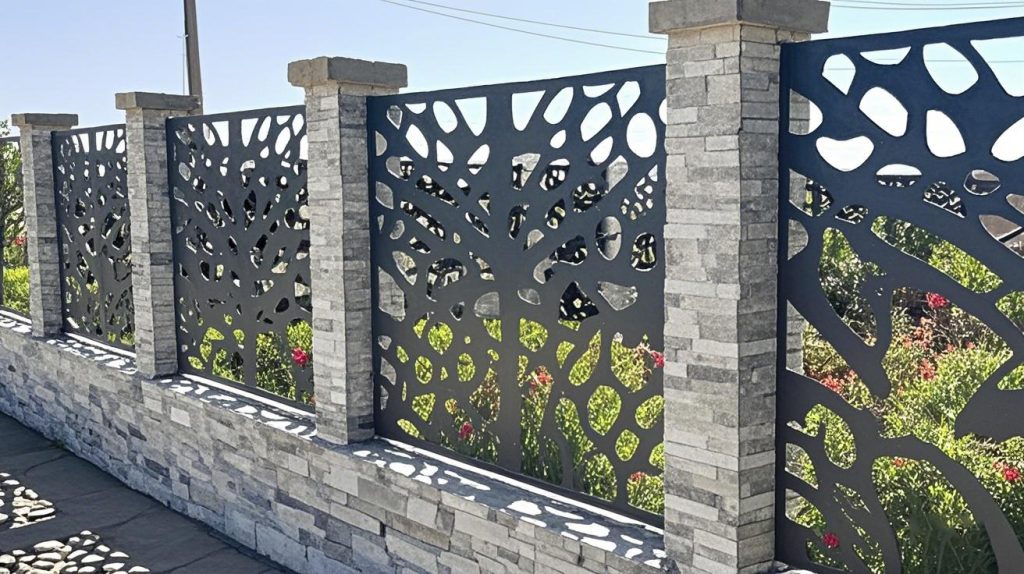
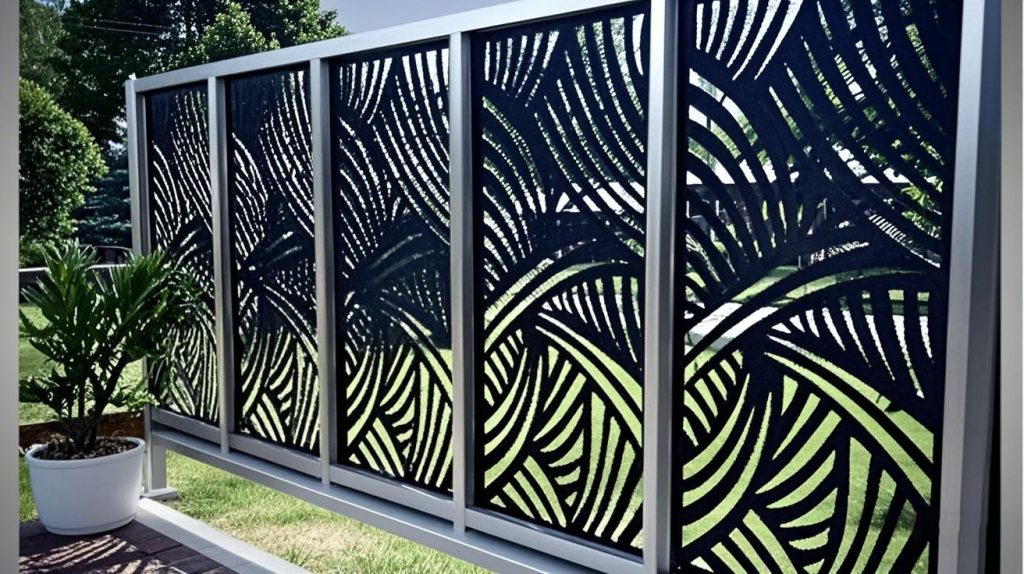
Laser cut fence, as a high-end customized subdivision of metal fencing, has emerged as the fastest-growing track in the global architectural fencing industry in recent years. Different from traditional tubular picket fences, laser cut fencing adopts precise fiber laser cutting technology to realize hollow-out patterns, geometric textures, artistic customization and integrated panel molding.
Benefiting from the rapid upgrading of laser cutting equipment, the booming demand for high-end residential renovation, commercial landscape design and luxury architectural decoration, the global laser cut fence market maintains a high growth rate, with a projected CAGR of 8.2% from 2026 to 2033, far exceeding the 4.9% growth rate of traditional aluminum fencing.
The industry is undergoing a comprehensive transformation from standardized hardware products to customized architectural art accessories. Intelligent manufacturing, personalized artistic customization, multi-material iteration, modular assembly and green low-carbon production have become the five core development trends of the industry.
High-margin customized laser cut products have gradually replaced low-value traditional fences, becoming the core profit growth point of overseas fence export enterprises.
Industry Overview & Current Market Status
1.1 Product Definition & Core Advantages
Laser cut fence refers to integral metal fence panels processed by high-precision fiber laser cutting, mainly including aluminum alloy, carbon steel, stainless steel and corten steel materials. Compared with traditional rolling and stamping fences, it has irreplaceable competitive advantages:
- Zero pattern limitation: Supports arbitrary geometric patterns, logos, plant textures, privacy hollow-out designs, meeting personalized architectural design needs
- High precision & flatness: Laser non-contact cutting ensures smooth cutting edges, no burrs, no deformation, improving overall decoration grade
- Integrated panel structure: Integrated molding avoids loose pickets and welding gaps of traditional fences, with stronger wind resistance and durability
- Dual functions of privacy & aesthetics: Adjustable hollow-out rate balances ventilation, light transmission and privacy, perfectly matching courtyard, landscape and commercial space scenarios
1.2 Global Market Demand Structure
High-demand markets are concentrated in North America, Western Europe, Australia and New Zealand, where high-end residential renovation and commercial landscape upgrading are active:
- Residential Scenario (68%): Luxury villa courtyards, backyard privacy screening, garden decorative fences, driveway laser cut gates
- Commercial & Landscape Scenario (24%): Hotel outdoor landscape, club partition screens, shopping mall decorative barriers, community public landscape facilities
- Architectural & Municipal Scenario (8%): Building facade shading panels, municipal park art fences, scenic spot decorative barriers
1.3 Industry Pain Points in Early Stage
In the past, laser cut fences were limited by high equipment costs, low batch processing efficiency and single material application, resulting in high market prices and only serving high-end customized markets.
In recent years, with the popularization of intelligent fiber laser cutting equipment and the maturity of automated production lines, processing costs have dropped significantly, driving the rapid popularization of products in the mid-to-high-end market.
Core Development Trends of Laser Cut Fence Industry (2026–2033)
2.1 Manufacturing Trend: Intelligent & Automated Precision Production
The laser cutting equipment industry is rapidly iterating, and intelligent manufacturing has become the standard configuration of the fence industry. Traditional single manual cutting is being replaced by fully automated production lines, bringing fundamental changes to the industry’s production efficiency and product consistency.
First, AI intelligent path optimization is widely applied. The system automatically arranges patterns according to plate specifications, improves material utilization rate by more than 12%, and effectively reduces raw material waste. Second, integrated automatic loading and unloading, cutting, polishing and spraying production lines realize unmanned batch processing, shorten production cycle by 30%, and solve the pain points of long delivery time and unstable quality of customized orders.
In addition, high-power fiber laser equipment gradually replaces traditional gas laser equipment, with lower energy consumption and higher cutting precision, meeting the ultra-fine hollow-out process requirements of high-end art fences.
2.2 Product Trend: Personalized Art Customization + Standardized Modularization
The industry presents a dual development pattern of customized high-end market and modular mass market, breaking the previous single high-end customized positioning.
For high-end markets such as luxury villas and commercial landscapes, personalized exclusive customization is the core competitiveness, including brand logo carving, exclusive pattern design, architectural style matching and color gradient spraying, realizing one-house-one-scene artistic differentiation. For the mid-end mass market, standardized modular laser cut fence kits have become mainstream.
Enterprises launch universal classic patterns, unified panel sizes and unified installation accessories, which can be quickly assembled on site, compatible with North American and European standard installation systems, balancing personalized aesthetics and mass production efficiency.
2.3 Material Trend: Diversified Iteration & Scenario-based Matching
Laser cut fence materials continue to iterate from single aluminum alloy to multi-material composite application, and scenario-based material matching has become a key trend:
- Powder-coated Aluminum Alloy (Mainstream): Low maintenance, anti-corrosion and rust-proof, suitable for coastal, rainy and high-temperature areas, occupying 72% of the residential market share
- Corten Steel (High-end Landscape): With natural rust texture and unique retro artistic sense, widely used in European and American high-end landscape projects and scenic spot decoration
- Stainless Steel + Mirror Brushed Finish: High-grade texture, anti-fouling and durable, suitable for high-end commercial buildings and hotel landscape scenes
- Thickened Carbon Steel: High structural strength, matching anti-climb and safety protection requirements of municipal and industrial scenarios
In addition, composite surface treatment technologies such as wood-grain transfer, matte black fine spraying and anti-graffiti coating are continuously upgraded, greatly improving the weather resistance and decorative effect of products.
2.4 Design Trend: Integration of Minimalist Modern & Ecological Landscape
Affected by global modern architectural aesthetics, laser cut fence design styles are gradually unified towards minimalist hollow-out, light and transparent, and ecological integration.
The complicated and fancy patterns are gradually eliminated, while simple geometric lines, symmetrical hollow-out, bionic plant textures and ultra-narrow border integrated designs are increasingly popular.
At the same time, the product design concept of integration of fence, screen and landscape has become mainstream. Laser cut fences no longer undertake simple isolation and protection functions, but integrate into outdoor landscape design, realizing the organic combination of space partition, light transmission and landscape beautification, which is highly recognized by overseas designers and property developers.
2.5 Market Trend: Low-end Homogenization Elimination & High-value Brand Upgrading
With the continuous influx of manufacturers, the low-end laser cut fence market has obvious homogenization competition, relying on low price to seize the market. In contrast, high-end markets pay more attention to process precision, design originality, surface treatment quality and after-sales service, and have high acceptance of premium products.
The industry is accelerating market differentiation: small factories with backward equipment and single process will be gradually eliminated, while leading enterprises with independent design capabilities, intelligent production lines and complete certification systems will occupy high-end overseas markets. Customized design capability and precision manufacturing level have become the core barriers to industry competition.
2.6 Environmental Trend: Green Low-carbon & Sustainable Production
Driven by global green building policies and LEED certification standards, the laser cut fence industry is accelerating green upgrading. On the one hand, fiber laser cutting technology replaces traditional processes, reducing production energy consumption by more than 30% and realizing low-emission and low-pollution production. On the other hand, all metal materials of laser cut fences are 100% recyclable, meeting the sustainable development requirements of North American and European green buildings.
More brands take environmental protection and recyclability as core selling points, launching eco-friendly laser cut fence series, which are widely used in government green projects and high-end eco-residential communities.
Industry Challenges & Restraining Factors
3.1 Technical Threshold & Talent Gap
High-precision laser cutting, pattern design and surface treatment require professional technical teams. The lack of senior pattern designers and precision processing technicians in the industry leads to uneven product quality, restricting the overall upgrading of the industry.
3.2 Customization Efficiency & Cost Contradiction
Highly personalized customized orders feature multiple varieties and small batches, which puts forward higher requirements for enterprise flexible production capacity. Improper production scheduling will easily lead to increased costs and extended delivery cycles.
3.3 Overseas Market Certification Barriers
High-end overseas markets have strict requirements on product safety, weather resistance and environmental protection. Laser cut fences need to pass ASTM material standards, coastal anti-corrosion tests and powder coating weather resistance certifications, bringing certain compliance costs and threshold pressures for export enterprises.
Future Market Forecast & Development Prospects (2026–2033)
4.1 Overall Market Growth
Driven by the upgrading of overseas high-end residential consumption and the iteration of commercial landscape design, the global laser cut fence market will maintain a high growth rate. It is expected that the market size will grow at a CAGR of 8.2% from 2026 to 2033, and the penetration rate in the mid-to-high-end metal fence market will increase from 19% in 2025 to 38% in 2033.
4.2 Segment Track Growth Highlights
- Modular DIY Laser Cut Fence Kits: Benefiting from North American DIY culture, standardized assembled products will achieve the fastest growth with a CAGR of over 9.5%
- Marine-grade Anti-corrosion Laser Cut Fence: Coastal high-end residential demand continues to rise, and high weather resistance customized products have broad profit margins
- Corten Steel Art Fence: Popular in European and Australian landscape markets, becoming a typical high-value differentiated product
- Smart Integrated Laser Cut Fence: Combined with intelligent gate control and induction lighting, it expands high-end smart home application scenarios
4.3 Industry Competition Pattern Evolution
The industry will gradually form a competitive pattern oflow-end standardized volume + mid-end differentiated features + high-end design customization. Leading export enterprises will rely on design innovation, intelligent production and compliance certification to further seize overseas high-end market share, and industry concentration will continue to improve.
Development Suggestions for Industry Enterprises
- Optimize Production Upgrading: Popularize intelligent laser cutting equipment and automated production lines to improve customization efficiency and product precision, and reduce comprehensive production costs
- Strengthen Design Differentiation: Build an independent pattern design library, launch scenario-based and style-based series products, and avoid low-end homogeneous price competition
- Improve Compliance Certification: Complete international standard certifications in advance to meet the entry requirements of North American and European high-end markets
- Balance Customization and Standardization: Develop standardized modular kits for mass markets while retaining high-end personalized customization capabilities to expand profit space
- Focus on Green Marketing: Take product recyclability and low-carbon production as selling points to cater to overseas green building trends and high-end consumer demands
Conclusion
The laser cut fence industry is in a period of rapid development and structural upgrading. Driven by technological iteration, aesthetic upgrading and green consumption trends, it will completely replace part of the market share of traditional decorative fences and become the core track of the global high-end fencing industry.
In the future, enterprises with intelligent manufacturing capacity, independent design innovation, standardized modular system and complete overseas compliance will gain long-term competitive advantages in the global high-end market and obtain sustainable high profit growth.
More fence: