
With modern commercial and residential developments, specifying a fencing system that balances architectural aesthetics with structural longevity is paramount. Wood-Plastic Composite (WPC) fencing has emerged as the premier choice for contractors all over the world. However, the ultimate integrity of a premium perimeter lies in its precise technical execution.
As a leading custom fencing manufacturer and direct supplier, JZT Metal Works provides comprehensive, field-tested WPC fence details and engineering structural breakdowns. In this technical guide, we walk through the step-by-step installation mechanics of our heavy-duty composite fencing system integrated onto solid concrete retaining walls.
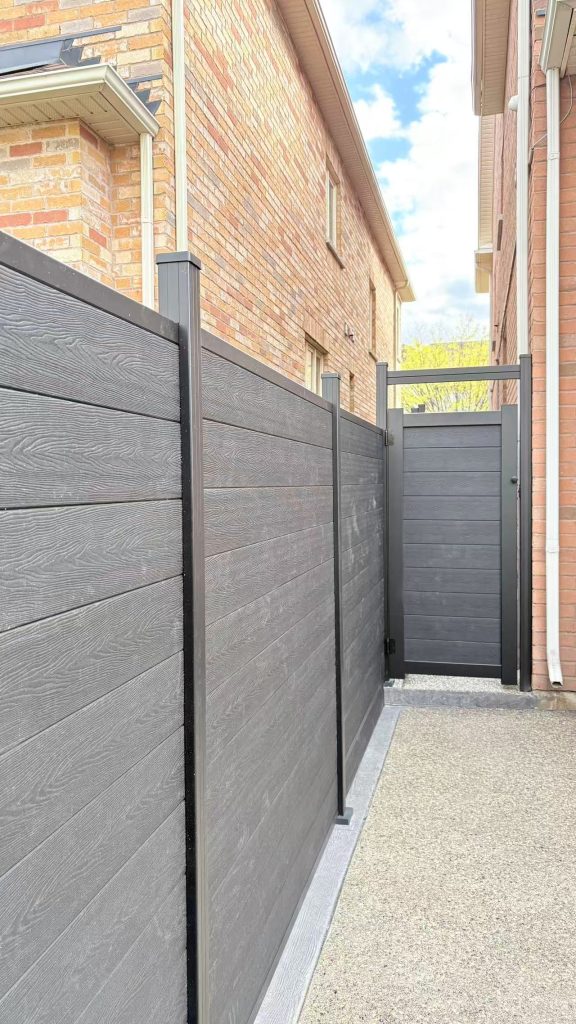
Substructure Layout & Aluminum Post Anchoring
Unlike standard dirt-embedded installations, securing a high-profile privacy fence onto a concrete base
requires robust structural engineering. The strength of the entire system depends heavily on the post-to-
concrete connection interface.
1. Precision Leveling & Alignment
Before any drilling begins, contractors must establish a precise layout line along the concrete foundation.
Because interlocking composite systems require strict parallel alignments, using professional laser levels and spirit levels is mandatory to avoid binding during panel insertion.

2. Engineered Stability: Heavy-Duty Aluminum Post Base Plates
When installing premium WPC (Wood-Plastic Composite) fencing, the foundation dictates the lifespan of the entire system. Our advanced WPC fence post base plate assembly combines structural-grade engineering with a sleek, minimalist design to deliver unparalleled stability without compromising on visual appeal.
