
Ensuring the safety and security of our equine companions is paramount for every horse owner. One crucial aspect of this is selecting the right type of fencing for your property. With a plethora of options available, it can be daunting to determine which horse fencing is best suited for your needs.
In this comprehensive guide, we’ll explore various types of horse fencing, highlighting their advantages, considerations, and suitability for different scenarios.
1. Wooden Horse Fencing

Wooden fencing is a timeless choice for horse owners, offering a classic appearance that blends seamlessly with rural landscapes. Typically constructed from treated lumber, wooden fences can vary in style from traditional split rail to sturdy post-and-rail designs.
Pros
- Visibility: Wooden fences are highly visible to horses, reducing the likelihood of collisions.
- Durability: When properly maintained, wooden fences can withstand the elements and last for many years.
- Aesthetics: They add a rustic charm to the property, enhancing its visual appeal.
Cons
- Maintenance: Regular upkeep, including painting, staining, and repairing damaged boards, is necessary to prolong the fence’s lifespan.
- Cost: Wooden fencing can be more expensive upfront compared to some alternatives.
- Weather Susceptibility: Without proper treatment, wood is vulnerable to rot, decay, and insect damage.
2. Vinyl Horse Fencing
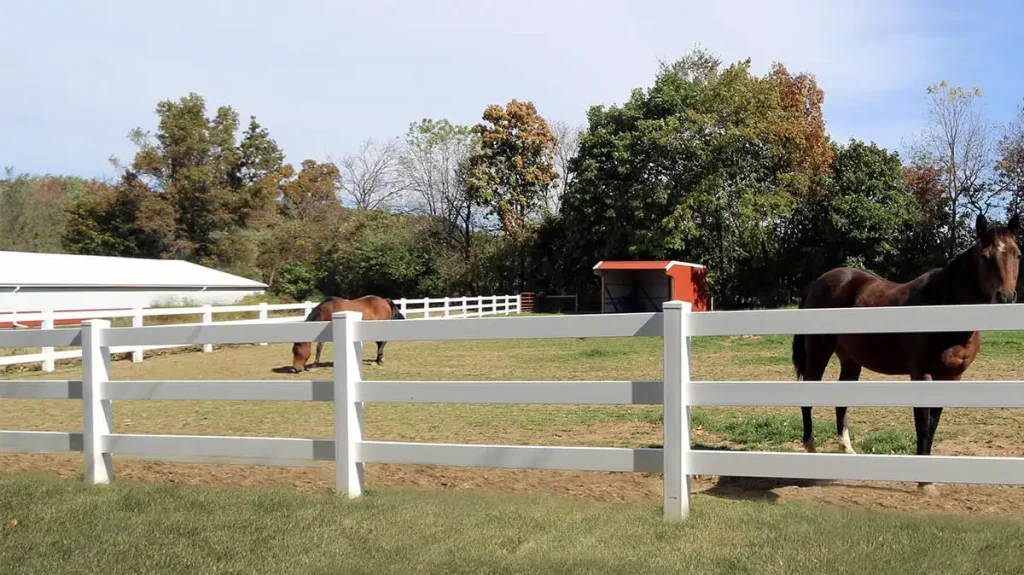
Vinyl fencing has gained popularity as a low-maintenance alternative to wood. Made from PVC (polyvinyl chloride), vinyl fences offer durability and longevity with minimal upkeep requirements.
Pros
- Low Maintenance: Unlike wood, vinyl fences do not require painting or staining. Periodic cleaning with soap and water is usually sufficient to maintain their appearance.
- Durability: Vinyl is resistant to rot, moisture, and pests, making it a durable fencing option.
- Safety: Smooth surfaces reduce the risk of splinters or protrusions that could injure horses.
Cons
- Cost: The initial investment for vinyl fencing tends to be higher than that for wood.
- Brittleness: In extremely cold temperatures, vinyl can become brittle and susceptible to cracking or breaking.
3. Electric Horse Fencing

Electric fencing utilizes a psychological barrier created by intermittent electric shocks to deter horses from attempting to breach the boundary.
Pros
- Cost-Effective: Electric fencing is relatively affordable and straightforward to install.
- Flexibility: It can be easily moved or adjusted to accommodate changes in pasture layout or grazing patterns.
- Portability: Ideal for temporary enclosures or rotational grazing systems.
Cons
- Maintenance: Regular inspection and maintenance are essential to ensure the fence is functioning correctly.
- Visibility: The thin wires of electric fencing may be less visible than physical barriers, increasing the risk of accidental contact.
- Power Dependency: Electric fences require a consistent power source, either mains electricity or battery-powered.
4. Wire Horse Fencing

Wire fencing, available in various configurations including smooth wire and barbed wire, is a cost-effective option commonly used for large pastures and properties with expansive boundaries.
Pros
- Affordability: Wire fencing is typically more budget-friendly than alternatives like wood or vinyl.
- Ease of Installation: Installation is relatively straightforward, making it accessible for DIY projects.
- Flexibility: Wire fencing can be adapted to different terrain and configurations.
Cons
- Safety Concerns: Barbed wire, in particular, poses a significant risk of injury to horses due to its sharp barbs.
- Visibility: Wire fences may be less visible to horses, increasing the likelihood of accidental collisions.
5. Mesh Horse Fencing

Mesh fencing, such as no-climb or woven wire, features small openings that prevent horses from getting their hooves caught while still providing a secure enclosure.
Pros
- Safety: Mesh fencing minimizes the risk of injury by preventing horses from getting tangled or trapped.
- Durability: Constructed from sturdy materials, mesh fencing offers long-term security and containment.
- Security: The tight weave also deters predators and unwanted wildlife from entering the pasture.
Cons
- Cost: Mesh fencing tends to be more expensive than simpler wire options due to its specialized construction.
- Installation Complexity: Proper installation requires attention to detail and may be more time-consuming.
6. Pipe Horse Fencing
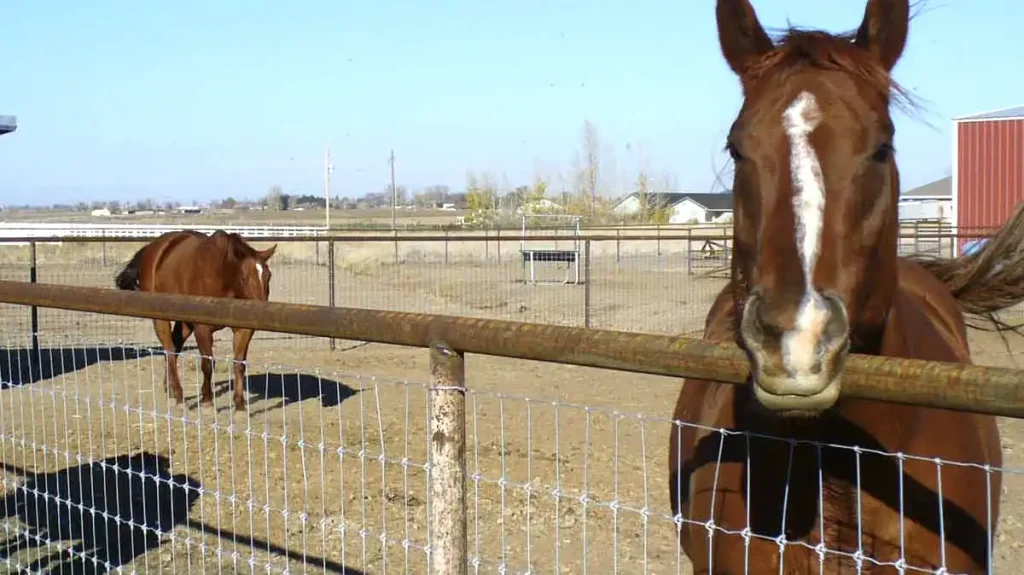
Pipe fencing, constructed from metal pipes, is a robust and durable fencing solution. It is commonly used in high-traffic areas and professional equine facilities due to its strength and longevity.
Pros
- Strength: Extremely durable and can withstand significant force from horses and external elements.
- Low Maintenance: Requires little upkeep once installed, making it a long-term, hassle-free solution.
- Longevity: Can last for decades with minimal wear and tear.
Cons
- Cost: High initial cost due to the price of materials and installation.
- Injury Risk: The hard metal can cause injury if horses collide with it or become entangled.
7. PVC Horse Fencing
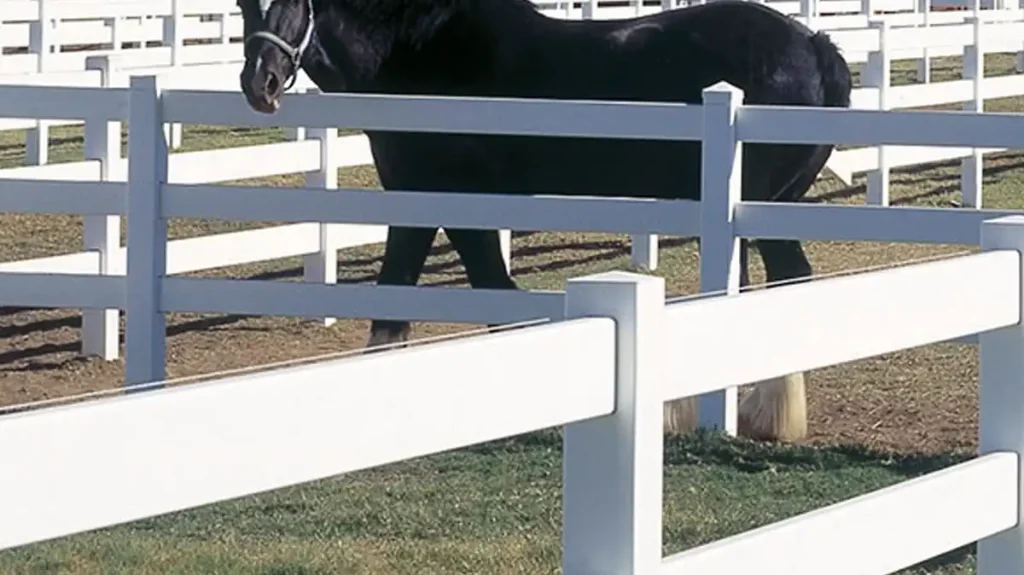
PVC fencing is similar to vinyl but often comes in a wider range of styles and is known for its resilience. It’s a modern choice that combines aesthetics with functionality.
Pros
- Aesthetics: Available in various styles and colors, allowing for customization to suit different property aesthetics.
- Low Maintenance: Does not require painting or staining and is easy to clean.
- Durability: Resistant to weather, rot, and insect damage, ensuring a long-lasting fence.
Cons
- Cost: Higher initial cost compared to some other fencing options.
- Impact Resistance: Can crack or break upon significant impact, although this is less common with high-quality PVC.
8. Rubber Horse Fencing

Rubber fencing, often made from recycled tires, provides a safe, flexible fencing option. It’s particularly popular in areas where horse safety is a top priority.
Pros
- Safety: The soft, flexible nature of rubber significantly reduces the risk of injury from collisions.
- Eco-Friendly: Made from recycled materials, it’s an environmentally sustainable option.
- Durability: Weather-resistant and long-lasting, capable of withstanding various environmental conditions.
Cons
- Cost: Can be more expensive than other fencing types due to the material and manufacturing process.
- Availability: Less common and may be harder to source, depending on the region.
9. High-Tensile Horse Fencing
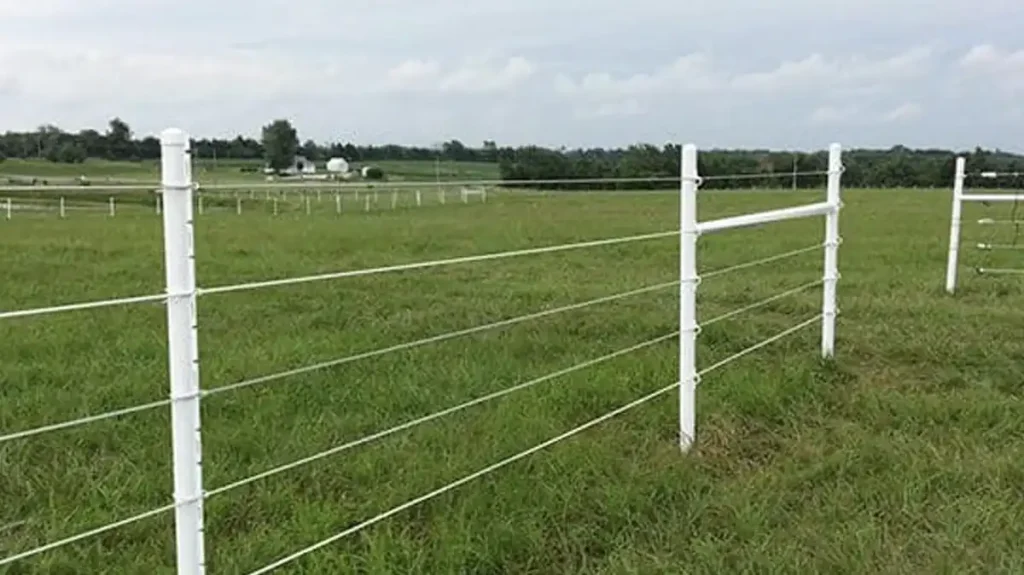
High-tensile fencing uses strong, tightly-stretched wires to create a secure and flexible barrier. It’s a modern choice known for its strength and low maintenance.
Pros
- Durability: Highly resistant to damage and stretching, ensuring a long-lasting fence.
- Cost-Effective: Less expensive than traditional wooden or vinyl fences.
- Low Maintenance: Requires minimal upkeep once properly installed.
Cons
- Visibility: The thin wires can be less visible, increasing the risk of horses running into the fence.
- Installation: Requires proper tensioning, which can be challenging and may need professional installation to ensure effectiveness and safety.
Conclusion
Choosing the right type of horse fencing involves balancing various factors such as safety, durability, cost, maintenance, and aesthetics. Each type of fencing discussed here offers unique benefits and potential drawbacks, making it essential to evaluate your specific needs and circumstances carefully.
- Wooden Fencing: Best for traditional aesthetics and properties willing to invest in regular maintenance.
- Vinyl Fencing: Ideal for low-maintenance and durable fencing needs in moderate climates.
- Electric Fencing: Suitable for temporary or supplementary barriers with cost-effectiveness.
- Wire Fencing: Budget-friendly and flexible, but with safety considerations.
- Mesh Fencing: Excellent for high-security needs and safety, though more costly.
- Pipe Fencing: Highly durable and low-maintenance, suitable for permanent installations.
- PVC Fencing: Combines aesthetics with functionality, great for moderate climates.
- Rubber Fencing: Prioritizes safety and eco-friendliness, ideal for paddocks.
- High-Tensile Fencing: Durable and cost-effective, perfect for large pastures.
- Hedge Fencing: Long-term and eco-friendly, providing natural aesthetics.
By understanding the characteristics of each fencing type, you can make an informed decision that ensures the safety, security, and well-being of your horses while also enhancing the functionality and beauty of your property.